Theory
General Approach
First you cut every decision dimension into disjunctive intervals, so they cover all of the solution space. We start with the x axis as the solution space of the first variable, and then do the same for the second, the y axis.


We then have to combine every interval of the one dimension with every interval of the other dimension. In this case there are 32 possibilities, i.e. predicates.
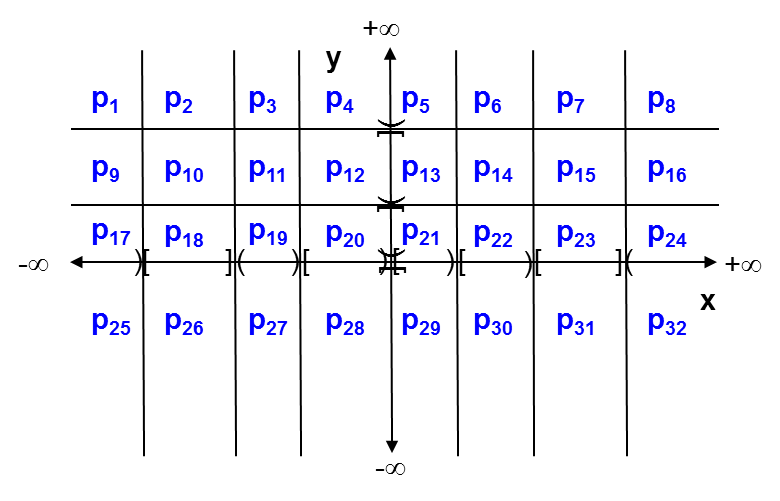
But most of the time we won’t need all of them. Some of them flawed or irrelevant. It’s better do deal with them separately and not include them in the vector. We call them exclusive.
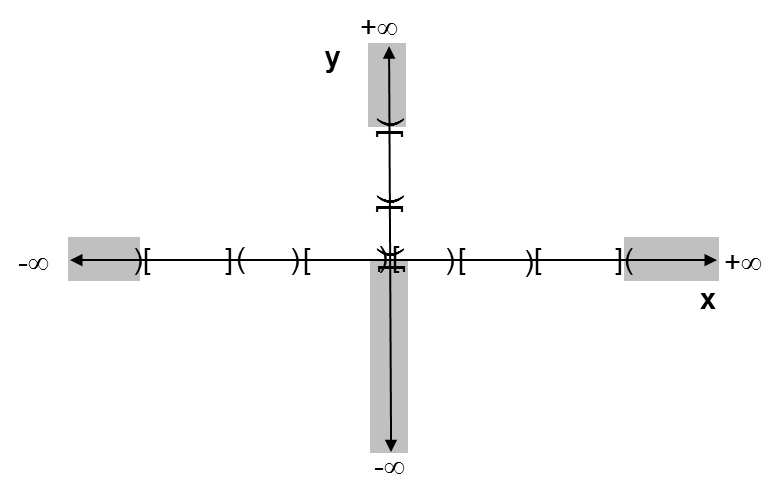

Now we are left with only the relevant predicates. But not all of them will get a branch of their own. So we can group certain predicates together and map them to three different branches in this example.
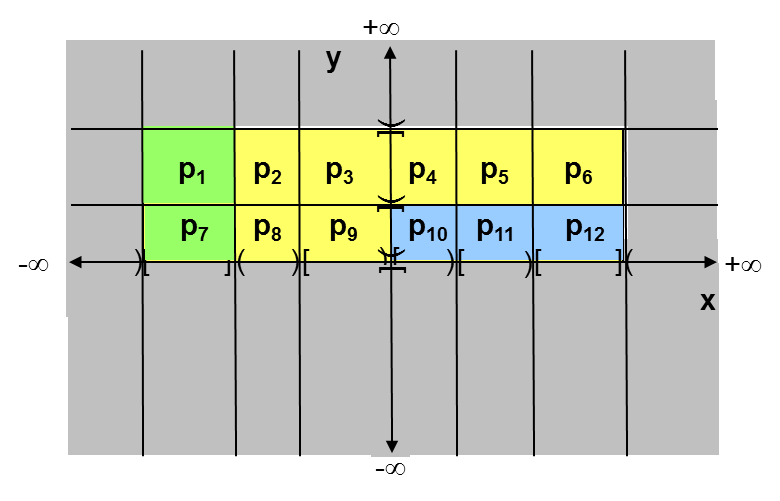
There are two different approaches to map the groups of predicates onto the different branches. Give each predicate within a group the same decision ID and map each decision ID to a branch or give every predicate a unique decision ID, but assign multiple decision IDs to each branch. We will cover that in the next chapter.